Best time to visit Glacier 3000: 21 years of wind and sun at the top
For a clear, calm day at the top, go in August, July, April or March. We counted every day at the MeteoSwiss station on the Scex Rouge crest, beside the top station: August averages 16 clear days with no gust of 80 km/h in lift hours, December and January about 12, and gusts strong enough to stop the lifts hit 7 days a month in December against 2 in summer. Going early does not dodge the wind, but giving it three days does: that gives you a 2 in 3 chance of a good day in January and nearly 9 in 10 in August.
Glacier 3000: Cable Car Roundtrip Ticket, from CHF 48
Facts checked 26 November 2026
Independent guide, not the official Glacier 3000 website. About this guide
Original research: 21 years of hourly wind and 12 years of sunlight measured at 2,964 m, beside the top station, counted day by day for lift hours. How we did it
of MeteoSwiss data at 2,964 m
21 years
clear, calm days in August
16
windy days in December
7
chance of a good day in 3 August days
88%
Book before you go
Live prices and dates on GetYourGuide, most with free cancellation up to 24 hours before. We may earn a commission.
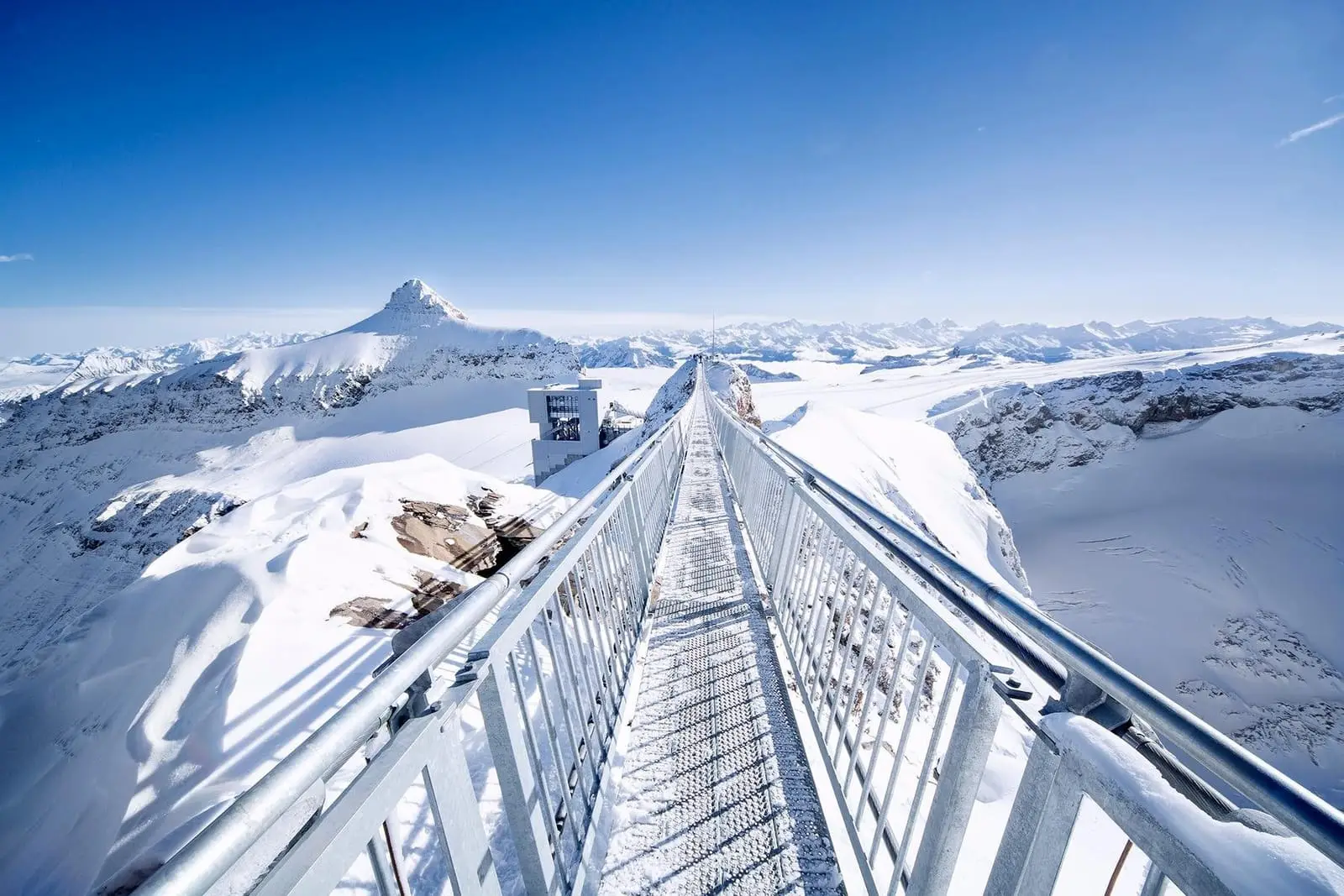
Return cable car ticket from Col du Pillon to Scex Rouge, including the Peak Walk, Ice Express and Glacier Walk; you make your own way to Col du Pillon.
Departs from Col du Pillon (no transport) · Ticket only, no fixed departure; cabins every 20 minutes
The short answer: summer for calm, March and April for snow and sun
The top of Glacier 3000 is at its calmest and clearest in July and August: about 16 clear, calm days a month, and gusts strong enough to stop the lifts on only 2. In the winter season, which runs from early November to 30 April, the best months are April and March, with 15 to 16 good days each, plenty of snow and longer daylight. December and January are the hardest months: about 12 good days and 7 days with gusts of 80 km/h or more in lift hours.
November and October sit in between, and so does May, when the summer season begins. If your dates are fixed, the table below shows what to expect; if they are not, the last column shows why a few days' slack is worth more than any choice of month.
The chart and table count every day from 2005 to 2025 at MeteoSwiss station Les Diablerets, which stands on the Scex Rouge crest a few metres below the top station. We only counted lift hours, 09:00 to 16:00, because that is when the weather matters to you. The midday temperature is the summit’s, not the valley’s: it is below freezing at noon on an average day from November to May.
Days at the top of Glacier 3000 by month
Month
Clear, calm days
Days with gusts of 80 km/h
Midday temperature
Good day within 3 days
January
11.5
6.7
−7.5 °C
66%
February
12.4
5.2
−6.1 °C
76%
March
15.5
5.3
−5.2 °C
77%
April
15.7
3.1
−3.5 °C
81%
May
14.0
2.4
−0.4 °C
80%
June
14.2
2.0
5.0 °C
79%
July
16.3
2.0
6.8 °C
81%
August
16.4
1.5
6.9 °C
88%
September
13.4
1.6
3.6 °C
75%
October
13.4
4.2
1.1 °C
70%
November
11.8
6.1
−3.2 °C
69%
December
12.6
7.0
−4.8 °C
68%
Averages for lift hours (09:00 to 16:00) at MeteoSwiss station Les Diablerets, 2,964 m: gusts 2005 to 2025, sky and temperature 2014 to 2025. Clear, calm day: at least 5 of the 7 lift hours near full sunlight and no gust of 80 km/h. Last column: the chance that at least one of three days in a row is clear and calm.
Days per month at the top of Glacier 3000Clear, calm daysDays with gusts of 80 km/h
Average days per month, MeteoSwiss station Les Diablerets (2,964 m): wind 2005–2025, sky 2014–2025.
Wind: what stops the lifts, and when
Wind is the usual reason the lifts stop: by the operator’s guidance, gusts over 80 km/h can close them. In winter, about 1 lift hour in 10 has a gust that strong; in summer, 1 in 30. The risk is almost the same at 09:00 as at 15:00, so an early start does not beat the wind.
What does help is patience. On a third of the days with an 80 km/h gust before noon, the wind dropped below that for the whole afternoon from 13:00. If you are staying nearby and the lifts are shut in the morning, look at the operator’s openings page again at lunchtime rather than writing the day off.
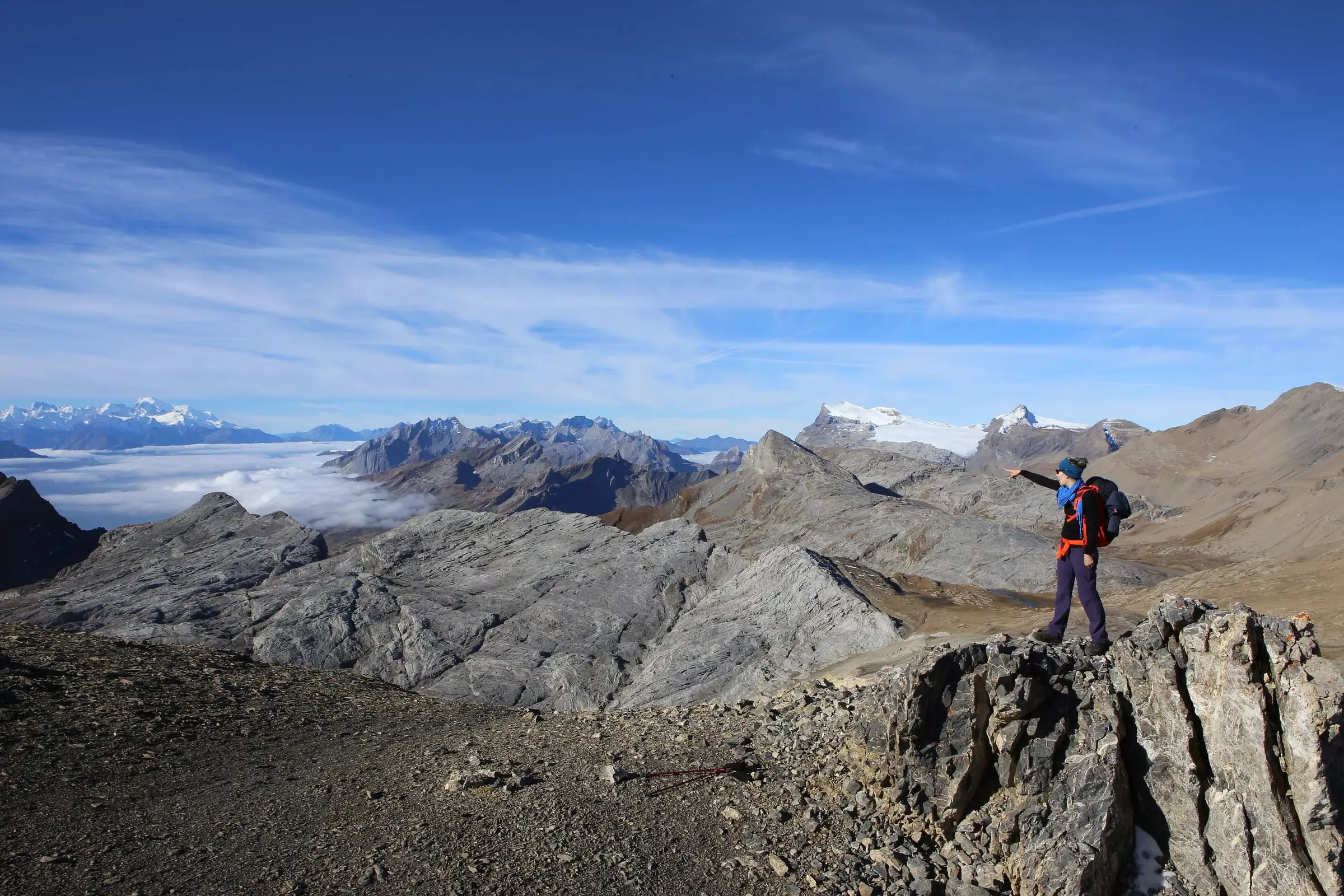
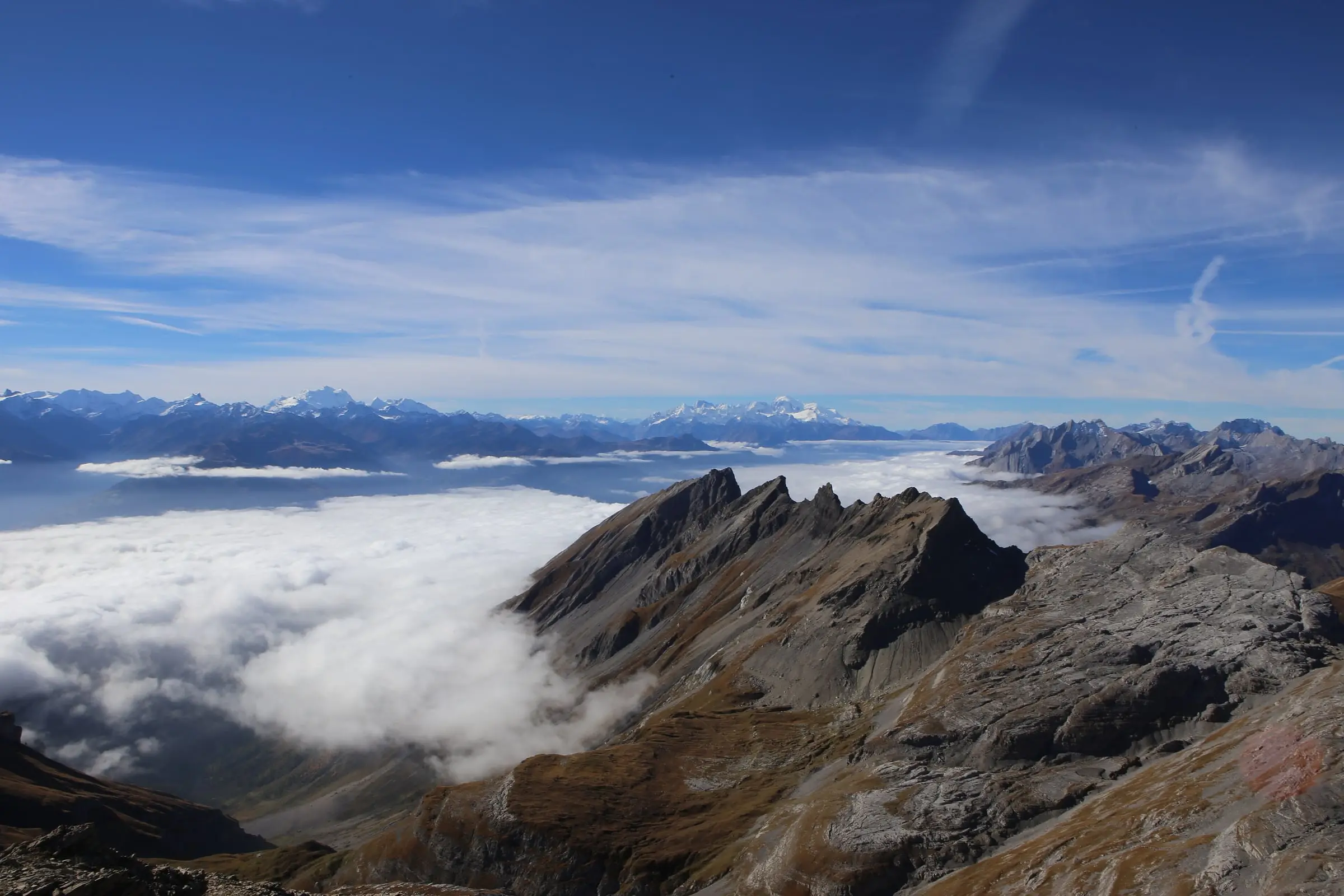
Between 40% and 53% of days are clear in lift hours, depending on the month, with January the cloudiest and July, August, March and April the clearest. On a clear day the view runs from Mont Blanc to the Matterhorn and the Bernese Alps.
The useful finding is that wind and clear skies rarely come together: at least 9 in 10 clear days in the record stayed below 80 km/h, and in summer almost all of them. So when the forecast for the summit is clear and sunny, wind is unlikely to be what stops you. The days to worry about are the grey, stormy ones, and those you can usually see coming a day ahead.
On a single day, the chance of a clear, calm top is 37% in January and 53% in August. Give it three days and it rises to 66% in January, 81% in April and July and 88% in August, because a bad day is usually followed by a better one. The table’s last column has every month, counted from 21 years of real day sequences rather than assumed.
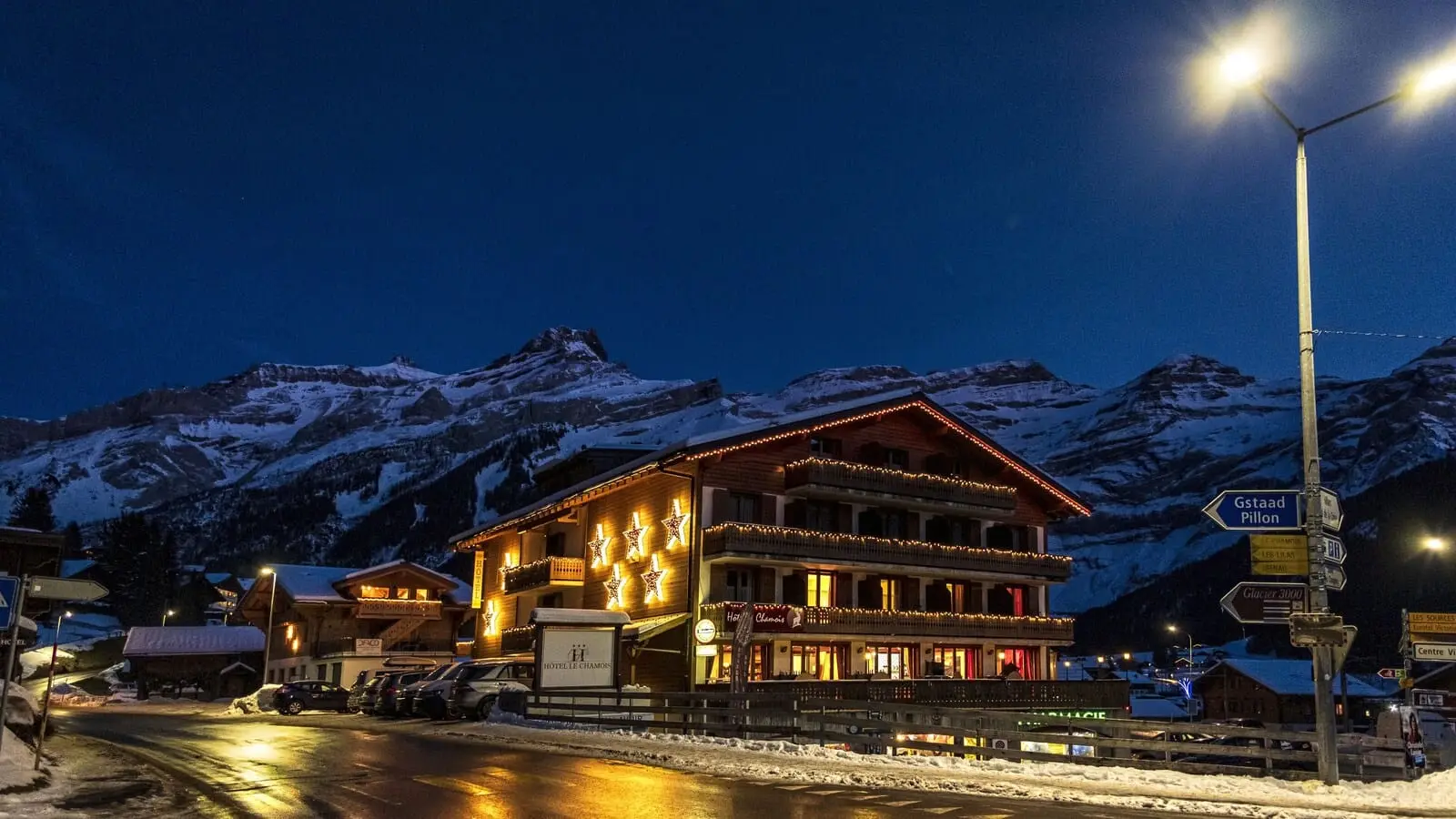
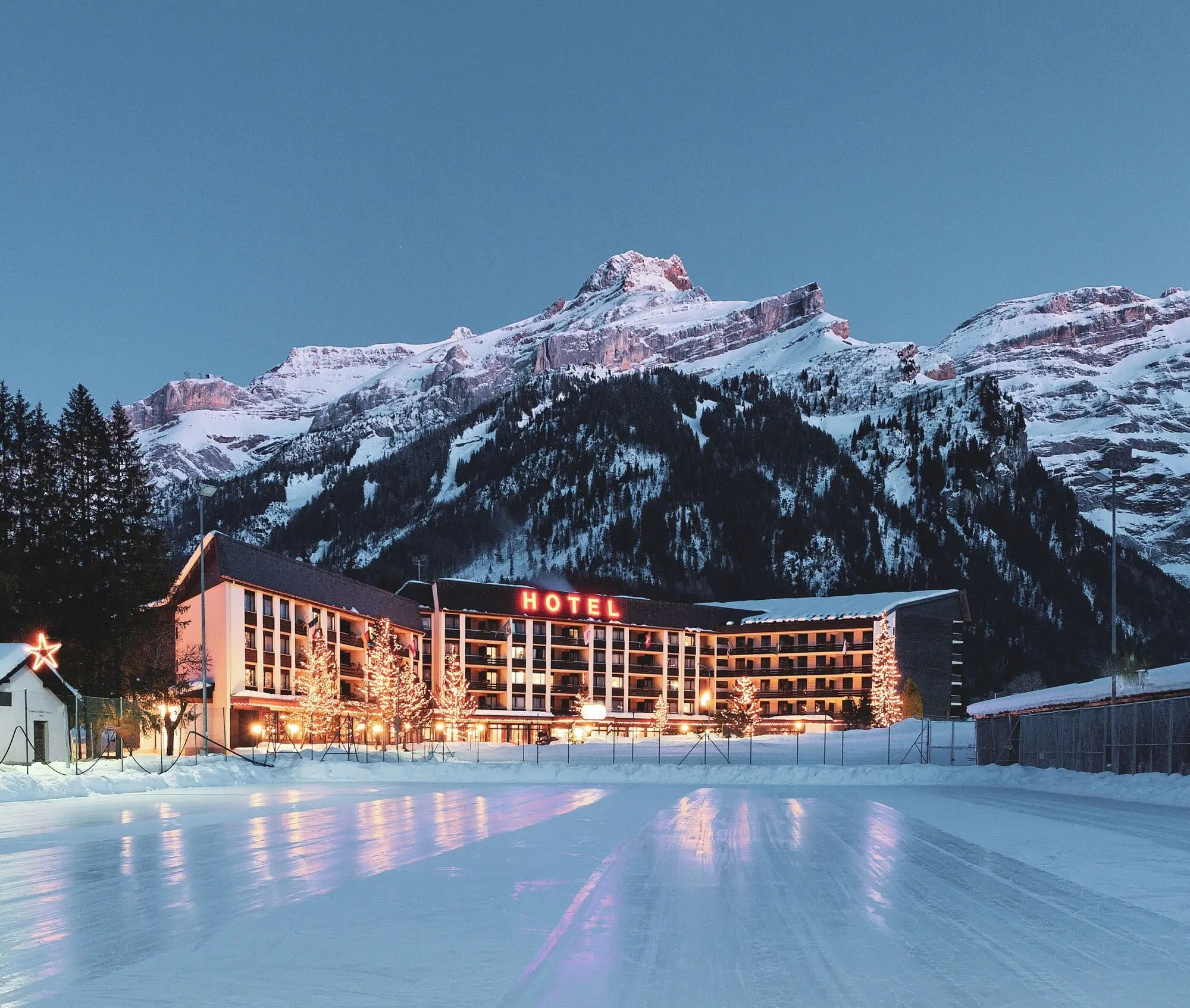
That is the case for sleeping in Les Diablerets rather than coming for the day: the hotels below are 8 minutes by car or a short PostBus ride from the cable car at Col du Pillon, so you can go up on whichever morning is clearest.
The operator’s return ticket on GetYourGuide has free cancellation up to 24 hours before and you pay later, so book it for your likeliest day and move or cancel it the day before if the summit forecast looks stormy. The same goes for the day trips from Montreux and Geneva below; on those, the cable car ticket is an option you add when you book. Book the first good-looking day, and keep a second in reserve.
Return cable car ticket from Col du Pillon to Scex Rouge, including the Peak Walk, Ice Express and Glacier Walk; you make your own way to Col du Pillon.
Departs from Col du Pillon (no transport) · Ticket only, no fixed departure; cabins every 20 minutes
We used MeteoSwiss’s open data for its automatic station DIA, Les Diablerets, at 2,964 m on the Scex Rouge crest, a few metres below the Glacier 3000 top station: the hourly maximum gust from 2005 to 2025, and hourly global radiation and air temperature from 2014 to 2025, when the station began measuring sunlight. We kept the hours from 09:00 to 16:00 local time, the lift hours.
A windy day has a gust of 80 km/h or more in lift hours, the speed at which the operator says the lifts can stop. The station has no sunshine recorder, so a clear hour is one with at least 70% of the sunlight measured on the clearest days at that hour and time of year; a clear day has at least 5 of the 7 lift hours clear. The operator decides whether the lifts run, and closures also depend on wind direction and snow, so treat a windy day as a risk, not a closure. Read on 26 November 2026.
Questions
What is the best month to visit Glacier 3000?
For calm, clear weather, August and July: about 16 clear days a month with no lift-stopping gust, measured at the summit from 2005 to 2025. In the winter season, April and March are best, with 15 to 16 such days. December and January are the hardest months.
How often is Glacier 3000 closed because of wind?
Gusts of 80 km/h or more, which can stop the lifts, hit about 7 days a month in December and January, 5 to 6 in November, February and March, and about 2 in summer, counted in lift hours from 2005 to 2025. The operator decides each morning; check its openings page.
Is it better to go up early in the morning?
Not for the wind: the chance of a strong gust is almost the same at 09:00 as at 15:00. On a third of windy mornings the wind dropped for the afternoon, so if the lifts are shut in the morning, check again at lunchtime.
How cold is it at the top of Glacier 3000?
At midday on an average day it is about minus 7.5 °C in January, minus 3.5 °C in April and plus 7 °C in July and August, measured at 2,964 m. Wind makes it feel much colder.
How many days should I allow for a clear day at Glacier 3000?
Three days give you a 66% chance of at least one clear, calm day in January, 81% in April and July and 88% in August. A single day gives 37% in January and 53% in August.